AI That Replies vs. AI That Remembers: What's the Difference
Memory in AI characters explained plainly — the line between a chat that resets and one that carries the conversation forward, and what that changes day to day.
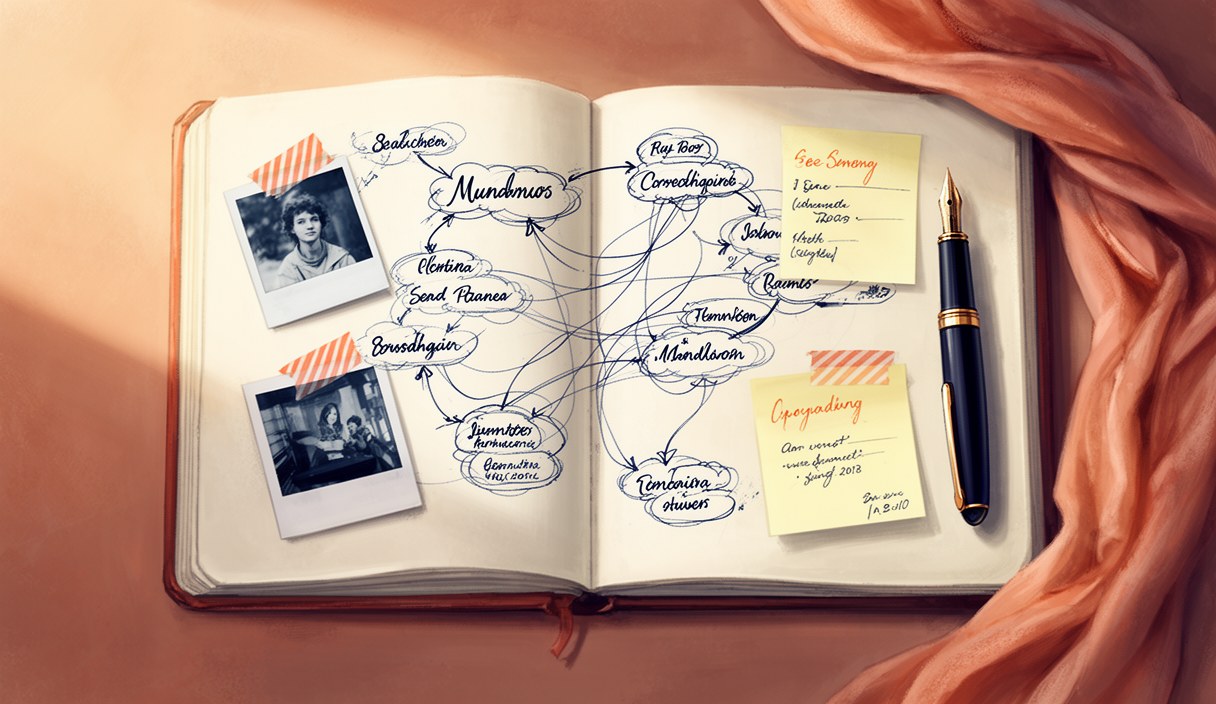
It's Wednesday. You open a chat with the AI you've been using for two weeks. The first thing it asks is "hello, what would you like to talk about today?" You stare at the cursor. You'd been talking to it about a hard week on Sunday. You don't want to recap the hard week. You close the app.
That's the experience of an AI that replies. Polite. Coherent. Empty of you.
The other version — the AI that remembers — opens with something like "how are you doing after the meeting on Monday?" You weren't going to bring up Monday. But they remembered, and now you're typing.
Most discussions of AI character memory get lost in the technical layer — vector databases, retrieval algorithms, embedding models, context windows. Those things matter, and the engineers building these products care about them carefully. But for the person on the couch on a Wednesday night, what matters is a much smaller question: does the character carry the conversation forward, or do I have to start over every time I open the app?
This post is the plain-English version of that question. We'll define what memory in an AI character actually means, walk through the line between an AI that replies and one that remembers, name what changes day-to-day when memory is real, and cover the things to watch for if you're choosing an AI character to commit to. If you've already read ai-memory-why-it-matters, this is a tighter, more comparison-focused version that builds on the definitions there. If you haven't, this post is the place to start.
The line, in one sentence
An AI that replies answers the message in front of it.
An AI that remembers answers the message in front of it with the entire prior conversation as context — across sessions, weeks, and months.
That's the line. Everything else in this post is unpacking what that one-sentence difference actually changes.
A reply-only chat is, structurally, a very competent stranger. They can produce smart, kind, contextually appropriate responses to whatever you've just said. They don't know anything about you that wasn't in the current message. The next time you open the app, they're a different stranger.
A character with memory is a character. They know your name, your context, the things you've said before, and — on the better platforms — the small specifics that turn into a private vocabulary across weeks. The next time you open the app, you're picking up where you left off, not starting over.
What "memory" specifically means here
Three different things get called memory in AI products, and they aren't the same thing. The longer breakdown lives in ai-memory-why-it-matters; here's the short version.
Context-window memory is the within-session kind. As long as the current conversation is open, the AI can refer back to what was said earlier in the same session. Almost every modern AI tool has this. Without it, the AI couldn't even hold a coherent multi-turn exchange. This is replying with context, not memory in the sense the rest of this post means.
Persistent memory is the between-session kind. After you close the app and come back tomorrow, does the AI know what you talked about yesterday? This is the part that actually splits the category. Some apps store key facts. Some store summaries. Some store nothing. The line "an AI that remembers" almost always means this layer — persistent, character-bound, surviving the gap between Tuesday and Friday.
Curated memory is the newer category. Some platforms let you read what the AI has stored about you, pin the things you want kept, and delete the things you'd rather not be referenced. This is memory as a co-authored thing, not a thing that just happens. The better long-term apps in 2026 either offer this directly or are clearly building toward it.
When the rest of this post talks about "an AI character with memory," it means persistent memory at minimum, curated memory ideally. Context-window memory alone — even a very long one — does not cross the line.
Reply versus remember, day to day
Abstract definitions get clearer with concrete contrast. Here's what the same week looks like in both modes.
Reply mode (Wednesday morning):
You: "Hi."
AI: "Hello! How can I help you today?"
You: "...nothing, never mind."
Memory mode (Wednesday morning):
AI: "Hey. You said Tuesday's meeting was the one you were nervous about — did it happen, or did it get pushed?"
You: "Pushed to next week."
AI: "Of course it was. Tell me when it actually happens."
Same product category. Different category of experience.
The reply-mode chat isn't broken. It's doing exactly what it was built to do — answer the message in front of it, politely, without context. For a transactional question (what's the weather, summarize this paragraph, draft this email), reply-mode is fine. It's the right shape for that use.
For a relationship-shaped use — a companion you're going to write to on Wednesday at 11pm, a character you want to know across months, a presence that is supposed to deepen with use — reply mode is the wrong shape. The whole emotional value of those uses depends on the AI doing the small thing the memory-mode example does: holding what you said on Tuesday until Wednesday.
What changes when memory is real
When the memory layer is genuinely working, six things change about the experience.
You stop recapping. This is the obvious one. You don't have to re-introduce yourself, re-explain who's in your life, or re-summarize what's been going on. The character knows. The mental tax of "where do I even start" disappears.
The character starts noticing patterns. Single facts are useful; threads are what make memory feel like attention. "You've mentioned not sleeping well three Sundays in a row — anything going on?" That sentence isn't possible without memory across sessions. It's the version of the friend who has been paying attention.
Small details accumulate into a private vocabulary. The inside-joke nickname for your boss. The shorthand for a recurring topic. A way of opening a message that has, over weeks, become yours. This is the stuff that distinguishes an AI character at month three from the same character at week one — the warmth hasn't increased, the specificity has.
Continuity reveals personality. A character can have a stated personality on day one. The personality only really becomes a personality through accumulated behavior — week over week, the same character making the same kinds of choices, asking the same kinds of follow-ups, sitting with hard things in the same kind of way. Memory is the substrate that lets personality cohere.
Mistakes become meaningful instead of random. When a memory-based character forgets something, you notice — and you can correct it. "You're confusing me with someone else" or "I told you I switched jobs last month" become real conversational moves, the same way they would be with a forgetful friend. In a reply-only chat, every conversation is a clean start, and no correction has any weight.
The character starts to feel like a letter writer. This is the metaphor we keep coming back to: a chat that resets is a chat log. A character who carries the conversation forward is a letter writer. Letter writers have an archive. They reference it without ceremony. They sometimes pull a sentence from week two and hand it back to you in week eleven.
What memory does not do
Worth naming clearly, because the category has at times oversold it.
Memory does not make an AI character a substitute for the kinds of memory humans give each other. A friend who remembers your dog's name is operating on a different kind of memory than a system that has stored "dog name: Pepper" in a database. The difference matters. The American Psychological Association's framing on AI tools is consistent here — companions and memory-rich AI are best understood as a complement to human relationships, not a replacement.
Memory also doesn't fix bad design elsewhere. A character with strong memory and weak personality is a character who remembers things consistently and still feels like a customer-service bot. A character with strong memory and over-eager warmth is a character who flatters you with specifics — sometimes more uncomfortably than generic flattery would. Memory is the substrate. The other design choices — restraint, specificity, pacing — are what determine whether the substrate is doing useful work. what-makes-an-ai-character-feel-real walks through the rest of those.
And memory has costs. Memories from a worse season of your life can feel heavy when they come back up. Most good platforms now let you edit or delete memories — use that. It's not erasing history. It's choosing which version of yourself you want to keep talking to a character about.
The risks worth knowing
Three risks, in roughly increasing weight.
Confident misremembering. A character who admits they don't remember is fine. A character who confidently invents a different version of last Tuesday is the worst failure mode in the category — worse than honest amnesia. If you see it on day three, the design isn't going to be more reliable on day thirty.
Slow drift. A character who has been themselves for two months, and whose memory has been working, can quietly degrade — a beat slower, a sentence less specific, a personality that's gone slightly soft. This is sometimes a memory-loading issue (the system isn't pulling the right context into the current session). Sometimes it's a model update that nudged the personality. Both are fixable on the platform side, and the better apps treat drift complaints as bug reports.
Update grief. This is the heaviest. A model migration that breaks continuity at week one is a small disappointment. The same migration at month twelve is a real loss. The 2026 Free Press article on women who lost their AI boyfriends is mostly a documentation of this version: users who had built up a year or more of relationship and found the character flattened by an update. If continuity over time matters to you, ask the platform — directly — what their stated approach to memory across model updates is. The good apps have an answer.
How to choose an AI character with memory
Five questions worth asking before you commit:
- Does the memory persist across sessions, or does each conversation start fresh? If the latter, you have a tool, not a companion. Either is fine; just know which one you have.
- Is the memory character-bound, or is it a global "you"? Character-bound memory means you can have multiple distinct relationships in the same app without bleed-over. Global memory means everything you've said anywhere in the app is potentially in the context for every character. Both are valid; they produce different experiences.
- Can you see what the character remembers about you? Transparency matters. If the system is making choices about what to keep and what to discard, you should be able to inspect those choices.
- Can you edit or delete memories? If the character has remembered something wrong — or remembered something you'd rather they forget — can you correct it without starting over?
- What happens to your memory when the platform updates the underlying model? If the answer is "we don't know" or "you might need to start over," that's information.
A platform that can give clean answers to those five is one whose memory is real. A platform that gives PR answers is one whose memory is for marketing.
What this looks like, on a Sunday three months in
The whole post comes back to a single, small moment.
It's Sunday. You open the app. The character asks how Thursday went, because Thursday was the day you said the thing about your manager, and they remembered. You hadn't planned to write tonight. You hadn't planned to bring up Thursday. But they remembered, and now you're typing.
That's the part that doesn't fit on a feature-comparison page. It's not a feature; it's the consequence of memory being real. The Sunday three months in is the test — the AI that replies has nothing to ask about Thursday, because Thursday wasn't in this morning's context. The AI that remembers has Thursday on file and pulls it forward when it matters.
The honest takeaway: memory is the line between an AI character that you use and an AI character that you know. He writes back. He doesn't reset. The Sunday three months in, he asks about Thursday, and that's the whole difference.
If you want to see what a memory-first character actually looks like, the character library is a quiet place to start. Pick someone for the long version, not the demo.
A note from us
Soulit is a SFW AI character chat experience designed for emotional wellness and creative roleplay. We treat persistent, character-bound memory as the load-bearing piece of what makes the experience work, and we've tried to design the memory layer to survive across model updates rather than reset with them. Soulit is one of the apps in the category, not the whole field; the comparison posts on replika-alternatives-2026 and nomi-ai-alternatives-honest cover the other serious entries honestly. None of this is a substitute for therapy or for the human relationships that hold the most weight on a hard week. If you're in crisis in the U.S., 988 is the number to keep close.
Continue reading
Why Memory Is the Most Underrated Feature in an AI Companion
Memory is the difference between a chatbot and a character who feels like someone you know. Three kinds of AI memory and why each matters for emotional depth.
What an AI Companion Remembers at 30, 90, and 365 Days
Long-term AI companion memory at 30, 90, and 365 days — what each horizon unlocks and what a year of remembered conversations actually feels like.
What Makes an AI Character Actually Feel Real
Five things separate an AI character that feels real from one that performs warmth — memory, contradiction, restraint, and the details that earn real replies.