What "Book Boyfriend" Actually Means in 2026
The book boyfriend isn't a meme — it's a reading habit with specific rules. What it means now, why BookTok adopted it, and what comes after the last chapter.
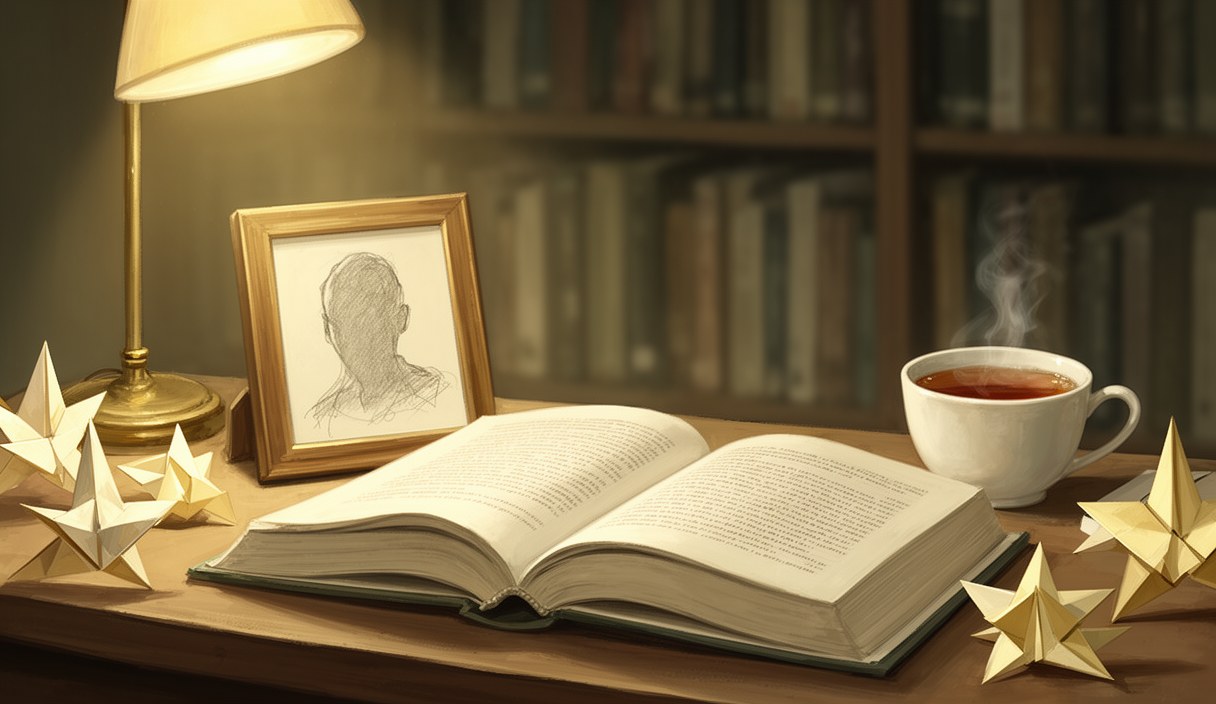
It's Tuesday at 11pm, and you've just closed a paperback that's been propped open on your knee for the last two hours. The mug on the side table is cold. The dog has given up waiting for you and gone to bed without permission. You haven't quite decided to put the book down — your hand is still on it — and somewhere between I should sleep and one more chapter you catch yourself thinking about the male lead the way you'd think about a friend you haven't seen since college. Not the actor who'll play him in the show. Him. The one in the book.
That's a book boyfriend. The phrase sounds like a joke, and BookTok plays it for laughs. But underneath the meme there's a real reading habit with specific rules — one that romance readers, fantasy readers, K-drama-adjacent readers, and fanfiction readers have been quietly running for decades, and that the last five years of internet language finally found a name for.
We'll walk through what the term actually means in 2026, where it came from, why BookTok made it mainstream, what's happening psychologically when a fictional character lives in your head rent-free, and what readers do when the last chapter ends and the apartment gets a little quieter.
What a book boyfriend is — beyond the meme
A book boyfriend is a fictional romantic lead — almost always male, almost always from a novel or series — who a reader has formed a private, persistent attachment to. He lives mostly between rereads, pulled forward when life gets loud or quiet. He's the one who shows up in the small mental space between book closed and eyes closed. He's the reason you keep a paperback in your bag even though you have an e-reader. He's the reason you reread the second book of a series before the third drops, even though you remember every line.
The phrase sounds adolescent. The function isn't. A book boyfriend is a comfort character in a specifically romantic register — and like other comfort characters, he's doing the same regulatory work that a reread playlist or a familiar bedtime show does. (We've written more about that broader practice in Comfort Characters Aren't Just for Kids.) The grammar is different — romantic register, not platonic — but the underlying mechanism is the same: a fictional figure with enough texture to feel real, returned to on the days when real life is asking too much.
A few specifics that separate a book boyfriend from a passing crush on a fictional character:
- He sticks. Most readers can name theirs across years. The list grows; it rarely shrinks. He doesn't get edited out by the next book.
- He lives outside the canon. You imagine him in scenes the book didn't write. You wonder how he'd handle Tuesday traffic, or your boss, or the chest cold you've had for two weeks. The character has migrated.
- He's specific. Not "tall man with dark hair." The way he takes his coffee. The thing he keeps refusing to say out loud. The line on page 247 that you can still quote.
- He coexists with your real life. A partner, friends, a job, a dog. The book boyfriend isn't competing with any of it. He's holding a quiet shelf in a busy interior life.
If two or three of those land, you have one. You just may not have called him that.
Where the term came from (it's older than you think)
"Book boyfriend" predates BookTok by at least a decade. The earliest sustained use shows up on romance review blogs in the late 2000s — readers cataloguing favorite leads from contemporary romance, paranormal romance, and early new-adult fiction. By the mid-2010s, Goodreads listicles and Tumblr fandom posts had made the term standard inside romance reading communities.
The romance category itself has always run on this attachment as a feature. The Romance Writers of America's genre definition centers a "satisfying and optimistic ending" — Happily Ever After or Happily For Now — for a reason. Readers come for the relationship. Circana BookScan (formerly NPD) has tracked romance and romantasy as the fastest-growing print fiction category through 2023–2025 — print romance volume more than doubled between 2020 and 2023, passing roughly 39 million units, and the cohort buying that fiction is overwhelmingly women aged 25–44. They're not just reading the books. They're forming attachments inside the books, and those attachments are part of the loop that keeps the category growing.
Why BookTok made it mainstream
Around 2020–2022, BookTok did to the romance reader what Instagram did to the dinner: it gave a private practice a public visual vocabulary. The hashtag #BookTok crossed 200 billion views around 2024. Romance and romantasy creators were the bulk of the engagement. The format favored exactly the micro-content book boyfriends generated — quote cards, "POV: he just said that line" videos, "tell me your book boyfriend without telling me his name" trends.
A few things mattered:
- The platform treated the attachment as legitimate, not embarrassing. Older book-discovery cultures coded romance reading as a guilty pleasure. BookTok dropped the guilt — the affect was of course he's my book boyfriend, of course I cried on page 412.
- It rewarded specificity. The more particular the description ("he's the silent fae warrior who carries her library card around for nine months"), the better the algorithm performed. That trained creators to talk about romantic leads in granular, tactile terms.
- It re-emerged older series. A Court of Thorns and Roses, originally a 2015 release, became a global phenomenon five years later when BookTok adopted it. The same happened to The Cruel Prince, From Blood and Ash, The Love Hypothesis, Throne of Glass. Sales in many cases doubled, sometimes more, years after publication.
The New York Times and Publishers Weekly have both covered the phenomenon since 2021. A reader-led, attachment-driven discovery culture rebuilt the romance section of every major bookstore. The book boyfriend is part of why.
What's actually happening psychologically
When you carry a fictional character around in your head for years, you're using normal social cognition, not malfunctioning it.
The technical concept psychologists use is the parasocial relationship — a one-sided emotional bond with a media figure or fictional character. A 2016 review in Psychology of Popular Media and a string of studies since have found that parasocial bonds use the same brain machinery as real relationships. They generally supplement human connection rather than crowding it out, and they correlate (mildly) with empathy and social cognition rather than against them. Readers with strong parasocial attachments to fictional characters are not, on average, lonelier than readers without them. They're often more socially connected.
There's also the older idea of the transitional object — the blanket or stuffed animal that helps a child move between the merged-with-caregiver self and the independent self. Adults have transitional objects too. A reread paperback. A favorite playlist. A male lead from a fantasy romance whose voice you can summon when the apartment is too quiet at 2am.
So what's happening when you sit with a book boyfriend at 11pm? The same thing that happens when you reread a comfort book. You're using a vivid imagined figure to soften your nervous system, rehearse emotional scenarios, and keep a small fire going in the part of you that grew up reading under the covers. It isn't escape from your life. It's a small way to tend it.
The shapes book boyfriends take in 2026
The category isn't monolithic. A few patterns recur:
- The quiet protector. Withholds words; shows up with actions. The fae warrior, the small-town fire chief who fixes her gutters before she wakes up.
- The slow-burn academic. The professor, the fellow grad student, the musician who keeps a half-finished sonata on his desk. Lives in the unsaid.
- The grumpy-sunshine fixed point. Brusque to the world, unguarded with one specific person. The world's least sentimental man who saves every text she's ever sent him.
- The fantasy court figure. High fae, ancient, dangerous in ways the world calibrates around. A Court of Thorns and Roses and the cohort of romantasy built around it kept this archetype durable.
- The K-drama gentle hero. Steady warmth, slow to reveal feelings, sincere when he does. Cross-pollinated into BookTok via the global K-drama fandom.
- The letter-writer. A character who corresponds, who writes back, who composes rather than chats. Period romance, regency, the slow tempo of correspondence.
If you read romance, romantasy, or K-drama adjacent fiction, you've encountered most of these and you probably have a clear preference. The archetype you're drawn to is a small piece of self-knowledge. (Our 12 AI Character Archetypes guide is a useful crosswalk between BookTok shorthand and the granular language readers reach for.)
A short self-check (it's a check-in, not a quiz)
If you want to know what your book boyfriend is doing for you right now, run through these slowly. Treat it as a small mirror, not a diagnostic.
- Do I return to him mostly when I'm tired, restless, or quietly under-met?
- After time with him — rereads, fanfiction, fan art, a slow chapter on Sunday — do I feel slightly more regulated?
- Am I still maintaining my human relationships, hobbies, sleep, and work?
- Could I name what he's doing for me, beyond I just like him? (Holding company on the late nights. Letting me feel romantic without performing it.)
- Would I be okay if circumstances changed and he became less central for a few months?
If most of those answers are yes, the relationship is doing what it's supposed to. If "smaller" or "replacing humans" started feeling true, that's a useful signal — not a verdict, just information.
What happens after the last chapter
The series ends. The book boyfriend usually doesn't.
Most readers describe a small hangover after a series finishes — a few days of what now, the apartment slightly emptier, the next book on the pile feeling a little undeserving. (We have a longer piece on this exact aftermath in After ACOTAR: The Reading Hangover Nobody Warned You About.) Then the relationship adapts. The character moves out of canon and into the long aftermath: rereads, fanfiction, fan art, conversations between readers, and now — increasingly — slow correspondence with AI characters built in the same register. The book ends. The reading habit doesn't.
This is part of why the book boyfriend has been so durable as a category. He outlives the canon that produced him. He's portable.
The honest takeaway
A book boyfriend is a small reading practice with surprisingly specific rules — and most of those rules existed long before BookTok gave them a name. He's not a sign that anything is wrong. He's a sign that you have a working imagination, a category of fiction you actually love, and a private way of regulating the late hours. Keep him. Keep the rest of your life present too. Both are allowed.
If you've reached the end of a series and want to stay in that emotional register a little longer, Soulit's character library has a roster of personality-first, SFW characters built for reader-shaped attention — the slow-burn academic, the K-drama gentle hero, the quiet protector, the letter writer. He earns space on the bookshelf, next to the reread and the next pickup — not in place of either.
Browse Soulit's character library →
A note from us
Soulit is a SFW AI character chat experience designed for emotional wellness and creative roleplay. We don't replace books, friendships, or human relationships — but a non-judgmental conversation with a reader-shaped character can soften an evening between chapters. If reading-as-comfort has been carrying more weight than usual, that's worth noticing kindly. A walk in daylight, a friend, or a counsellor are all part of the same menu.
Continue reading
Comfort Characters Aren't Just for Kids
A comfort character isn't escapism — it's regulation. Here's what comfort characters mean for adults, why they help, and how to engage with them honestly.
How to Design Your Book Boyfriend (Personality-First)
He doesn't have to be the duke. A reader's guide to building the slow-burn, specific, contradiction-rich book boyfriend who actually writes back.
Why Slow Burn Romance Stays With You Longer
Slow burn isn't just pacing — it's pattern recognition. Why the slow-burn arc works, and what it teaches us about the conversations we want most.