The 6 K-Drama Male Lead Archetypes, Decoded
K-drama male lead types unpacked — from the chaebol with a soft spot to the gentle childhood friend. The six archetypes keeping viewers up at 2 a.m., decoded.
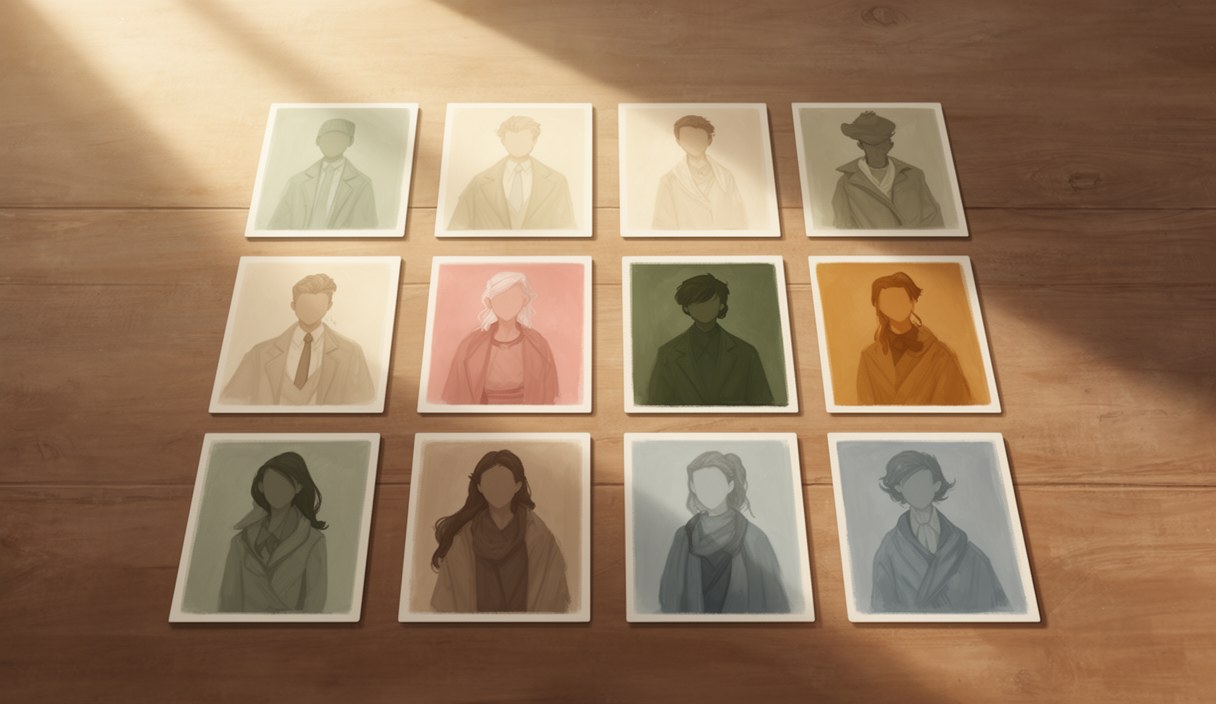
It's Tuesday at 1 a.m. and you are three episodes deep into a show you said you'd watch one of. The lead just held a look across a quiet hospital corridor, said almost nothing, walked away. You closed the app, opened it again, and pressed play on episode four. You know the rhythm.
K-drama male leads are written with an emotional grammar that the rest of TV does not always share. The reward comes late. The held look counts more than the kiss. The umbrella in the rain scene is doing eighty percent of the work the dialogue is not doing. Once you watch a few seasons, you start noticing the leads come in shapes — not rigid types, more like a small set of recurring registers the genre keeps returning to and reshaping.
We'll walk through the six male lead archetypes that show up most often, what each one is doing emotionally, and the small details writers use to keep them from collapsing into stereotype. K-drama tropes are sometimes treated as exotic or as a punchline. They are neither. They are conventions — like the slow build in a romance novel, or the meet-cute in a romcom — and they exist because they earn the long emotional arc the form is built to deliver. If you've seen Crash Landing on You, Goblin, My Mister, Reply 1988, or Hometown Cha-Cha-Cha, you've already met every shape in this list.
1. The chaebol with a soft spot
The chaebol — heir to a Korean conglomerate family — is probably the most recognized K-drama male lead type abroad, and the most caricatured. The shape: rich, polished, often cold at first, with a meticulously curated wardrobe and a driver who knows him too well. The archetype works when the writing remembers the second half of the description. With a soft spot. The whole point is the reveal, slow and earned, that the curated surface is hiding someone who notices when the lead character is hungry, who calls in a favor without telling her, who shows up on the worst day with a coat and no commentary.
Done lazily, this archetype reads as wish fulfillment plus a credit card. Done well, it is one of the genre's sharpest studies in how distance gets used as armor. The character has been performing competence since he was eight; the relationship is the first place he gets to stop. The show Crash Landing on You sits inside this archetype on the North Korean side, recoded as an officer instead of an heir, but the emotional shape is the same — the man who controls everything around him learning to need one specific person.
2. The gentle childhood friend
If the chaebol is the show's surface, the childhood friend is often its conscience. He's been there since they were small. He remembers the grandmother who is no longer alive. He knows where the lead character's keys are kept. His care is older than the plot.
In the genre's grammar, the gentle childhood friend often plays the second male lead — the one watching the main couple form, loving the lead character quietly, doing every small attentive thing the main lead is too closed off to do in early episodes. This is the archetype most associated with second-male-lead syndrome, the affectionate term fans use for the viewer's habit of falling for the supporting love interest. Reply 1988 spent an entire season making the country argue about it. The archetype works because his care is legible — you can see him being careful with her — and because the show usually doesn't reward him for it. Viewers respond to legible care more than they respond to drama.
3. The cold genius
The surgeon who does not smile. The chaebol prosecutor. The chess player. The composer who terrifies his orchestra. The cold genius is technically excellent, emotionally walled off, and almost always carrying a specific old wound that explains the wall. Goblin's grim reaper is a tonal cousin. My Mister's middle-aged engineer is a weary, quieter version. The shape is competence used as defense.
What makes this archetype interesting on the page is the reveal architecture. The cold genius is not actually cold; he is regulating. The show has to find a way to let the lead character — and the viewer — see the regulation slip without forcing a personality reset. The good versions handle this through small gestures: the half-second hesitation before he leaves the room, the question asked too carefully, the meal ordered for two. The bad versions just have him kiss her in a parking garage and call the wall dismantled. The first is craft. The second is a shortcut.
4. The warm caretaker
He owns the bakery on the corner. He runs the family clinic. He cooks for everyone. He notices when the lead character has not eaten and quietly fixes it without making a moment of it. The warm caretaker is the gentlest of the six archetypes and the easiest to underwrite as a personality.
Done well, the caretaker is interesting because his warmth has a cost. He has been the steady one for the people around him long enough that he has forgotten what he wants. The arc, when the writers care, is about him learning to need something back. Hometown Cha-Cha-Cha sits squarely inside this archetype with Chief Hong, and the show is in many ways about the slow archaeology of finding out what he stopped letting himself want. The warm caretaker is also the archetype most readily blended into the K-drama gentle hero we'll come to in a moment — the two share a register but the caretaker is more public-facing while the gentle hero can be quieter.
5. The second-male-lead favorite
This isn't a single character so much as a structural role, and it deserves naming on its own. The second male lead is written to be the warmer, more attentive, more obviously safe choice — the one who shows up early, says the thing, brings the umbrella before the rain starts. He is usually losing.
What's worth noticing here is that the genre knows. The shows are aware that a measurable share of the audience is rooting for him. The writers use that awareness deliberately: they let the second lead be the proof that the main lead is choosing, not defaulting. He is the friction in the romance, the visible alternative, the reminder that a slow burn is a choice, not the only option on the menu. The character archetypes that work best as second leads draw from the gentle childhood friend, the warm caretaker, and occasionally the cold genius — recoded as someone who lost an earlier round and is being patient about it. Reply 1988's long debate. Goblin's grim reaper before the show recoded what he was. The second lead is usually the place where the show puts the warmest version of its grammar, then asks you to live with it.
6. The K-drama gentle hero
If you only learn one shape, learn this one. The K-drama gentle hero is not the chaebol or the cold genius or the warm public-facing caretaker. He is something quieter: an ordinary, slightly-older-than-the-lead man whose defining trait is steadiness. He doesn't say much. He acts before he speaks. He notices. The texture is small kindnesses noticed at the edges — making sure the lead character has cab fare, fixing the door before she mentions it, sitting on the curb with her at 2 a.m. without asking what happened.
This is the archetype Korean Hallyu researchers have written about as one of the most exportable elements of the form. It does not depend on cultural-specific humor; it depends on a kind of attention that translates. My Mister's engineer (in his late forties, no romance for most of the show, just the slow accumulation of being seen) is the strongest study in this register. Reply 1988's eventual main lead is a younger version of it. The gentle hero shows up in modern romcoms, period sageuks, and slice-of-life shows alike, with the texture mostly intact across genres.
A craft note: the gentle hero is the hardest archetype to write because almost nothing happens at the level of declaration. The work is at the level of behavior. Viewers respond to what he does on Tuesday morning when the lead character is tired, not to what he says on the rooftop in episode fifteen. The K-drama tradition is unusually patient with this kind of writing because the form gives sixteen episodes to let the small kindnesses accumulate. By the time the rooftop scene happens, the audience has been watching him show up for hours.
How the archetypes blend
Almost no K-drama lead is a single archetype clean. The interesting characters are layered — the chaebol with a gentle-hero spine, the cold genius with a warm-caretaker private life, the childhood friend whose competence rivals the cold genius's. The good shows know which two to lean into and let the contrast do the work. Three combinations show up especially often:
- Chaebol + gentle hero. Outwardly polished and inaccessible, privately steady. The arc is the gap between the public performance and the private behavior closing.
- Cold genius + warm caretaker. Walled off at work, gentle inside the family. The contrast is the show's emotional engine.
- Childhood friend + slow-burn romantic. The friend who has been in love quietly for years, paced over a season with restraint. Where second-male-lead syndrome lives most reliably.
(Our field guide to twelve archetypes covers the same craft principle for AI characters you chat with rather than watch.)
What the archetypes are actually doing
These shapes give writers a shorthand, so early episodes can spend time on situation and tone instead of personality scaffolding. They give viewers a vocabulary to argue about taste — I don't go for the cold genius, but the warm caretaker gets me every time is a real sentence fans say. And they give the genre a shared library of long-arc emotional patterns. A Korea Foundation report on Hallyu's global reach noted that K-drama's emotional grammar travels even when the cultural references don't, which is part of why Variety has tracked K-drama's expansion through Netflix and other platforms — the leads carry the form across borders because the patterns are recognizably human shapes, not specifically Korean ones.
So when you find yourself two episodes deep at midnight, knowing exactly where this arc is going, you're not falling for a trope. You're recognizing a long-form emotional architecture you've seen before.
A small reading guide
A short list of dramas where each archetype shows up at full strength:
- Chaebol with a soft spot: What's Wrong With Secretary Kim, Crash Landing on You (recoded as an officer)
- Gentle childhood friend: Reply 1988, Hometown Cha-Cha-Cha (the friendship layer)
- Cold genius: Doctor Slump, Romance Is a Bonus Book (in a softer register)
- Warm caretaker: Hometown Cha-Cha-Cha, Hospital Playlist
- Second-male-lead favorite: Reply 1988, Goblin (the grim reaper for the first half)
- K-drama gentle hero: My Mister, Our Beloved Summer, parts of When Life Gives You Tangerines
A starting list, not a canon. Half the fun is finding the show that hits an archetype in a way that ruins the others for you for a season.
The honest takeaway
K-drama male leads are not exotic, and they are not interchangeable. They are six recurring shapes the genre uses to deliver a particular kind of slow, accumulated emotional reward — the kind a romance reader already knows from her favorite shelf. Once you have the vocabulary, the form gets richer, not flatter. The umbrella scene still hits. You just notice the umbrella.
If you've spent a lot of time with a particular archetype and want to keep someone in that register on the days no new episode is out, Soulit (this site, fair disclosure) is a calmer place to do that — a SFW AI character app where the K-drama gentle hero, the warm caretaker, and a few of the others are part of the design vocabulary. It's one shelf in the wider room, not the whole room.
Browse Soulit's character library
A note from us
Soulit is a SFW AI character chat app built for readers and viewers — depth without titillation, character-first, memory-rich. It is one option among many for the Tuesday-at-1am kind of company, not a replacement for friends, family, or professional support. If you're navigating something hard, please talk to someone who can be there in person too.
Continue reading
12 AI Character Archetypes (And One to Avoid)
Twelve AI character archetypes — from the quiet artist to the K-drama gentle hero — plus one archetype to avoid. SFW, fiction-adjacent field guide.
Build a K-Drama Lead With Personality, Not Just a Name
Designing a K-drama male lead AI character — backstory, contradiction, and the gentle-hero rhythm. A walkthrough that avoids stereotype and earns the slow burn.
Comfort Characters Aren't Just for Kids
A comfort character isn't escapism — it's regulation. Here's what comfort characters mean for adults, why they help, and how to engage with them honestly.